With technological advancement and a growth in the tendency to shop online, e-commerce stores like Shopify, Amazon, Alibaba, and eBay are very popular nowadays; they are made at low costs and can promise better conversion rates and thus, increased profits. However, merely setting up your e-commerce website isn’t enough. A great deal of thought needs to be put into the layout of your website to ensure the successful generation of sales. A business also needs to realize the need to properly market its website through the aid of internet demographics and advertising agencies in Dubai, for example.
Here are 7 mistakes that can potentially be detrimental to your e-commerce business and should be avoided.
1. Lack of trust within your funnel
One method that businesses can use for better sales is to improve trust within their funnel. Funnel refers to the process that buyers go through before they actually buy an item online, which may include seeing an advertisement online via some advertising agency, viewing the product, and confirming checkout. Your conversion rate will improve substantially by increasing the amount of trust people have at every stage of the process. Lack of attention paid to this can be a colossal error, which can in turn lead to ruining your e-commerce market.
One way to build this trust that your business can employ is to use a ‘live chat’ option on your e-commerce website. Research has proved that, in accordance with human psychology, consumers prefer live chat interaction over customer services with more delayed response because the immediate interaction gives them a sense of authenticity, which can be great for business. Moreover, this may also help build a strong, loyal consumer base by establishing cordial relations between the producers and the consumers. With the option of a live chat, businesses can ensure high standards of customer service.

Another technique that will surely contribute to trust building is affiliation with companies that customers will deem ‘trustworthy’. For example, the logo of PayPal offers payment security, and having it displayed on your e-market will certainly boost your sales. Customers also prefer transparent information regarding the online merchant if they are willing to reveal their credit card information.
Finally, a great way to avoid escalation of lack of trust and provide social proof can be through testimonial feedback from customers that will not only boost the confidence of other customers, but will also enable your business to further improve aspects of its e-commerce market that consumers have problems with. Another plus of this method is that a positive testimonial can easily be maneuvered by asking the right questions!
2. Bad showcasing of product benefits
Your business needs to fully promote the benefits of the product it wants to sell. People want to know exactly why they should purchase an item, so tell them! You can do this in many ways. Displaying professional, well-edited (but not to the point of looking artificial) pictures of the products is the obvious option, but taking appropriate pictures can prove difficult if one is not experienced. Factors such as background, light, and surface need to be taken into account.
The best choice might be to hire a professional and reap a long-term benefit out of it instead of doing amateur photography work on your own. It is believed that human brains respond better to images than words, but if they don’t see a clear image, it is less likely to ensure the quality of the product for them. Crisp and clear visuals are very important in order to engage shoppers.
And of course, the most important thing you can do is to improve your product descriptions. Whenever you’re describing benefits, you need to have a clear and in-depth understanding of your customers. You can then relate how certain features of the product will aid the struggles of your customers. Don’t forget to use Power Words if you want to emphasize any of the points you are making on the page.
Here’s an example of a product description that comes from the Fire HD 8 product page on Amazon.

3. Not providing a progress indicator
Studies prove that people prefer to have progress indicators. Research suggests that progress bars increase customer satisfaction, engagement rates, and are effective since they offer a sense of goal accomplishment. If we delve into a bit of human psychology, we will find that these progress checks act like uncompleted tasks that need to be completed for closure.
An example of this can be a reminder that the customer hasn’t purchased anything since last month or encouragement to add to your cart on consecutive days. This is called positive reinforcement, which can help achieve milestones of success through progress indicators. Websites can captivate customers through these indicators by creating a sense of tension regarding the incompleteness of certain tasks.
4. Lack of speaking URLs
A speaking URL refers to a website address that is simple and states the exact function of the website. An example of this is: https://www.readanybook.com/ebook/the-history-of-sir-richard-calmady-808
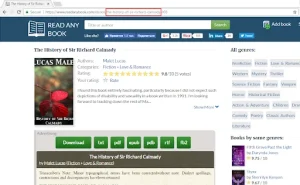
Speaking URLs are user-friendly since they help customers with their simple, telling keywords.
The reason why speaking URLs are effective is that it becomes easy for the customer to know exactly what to expect when they click on your website, which means there is decreased mismatch of motives, and you are never accused of being ‘clickbait’.
Having long URLs that aren’t comprehensive can often seem inauthentic, which will turn people off. There is also always a chance that your URL might get reposted, in which case the keywords present in your anchor text will become the main driver behind getting you to the top of search engine rankings.
5. Non-unique titles
Businesses should also avoid using titles that are vague and generic. Duplicate title tags can be a huge problem for online stores. It is important to ensure that they are unique. It is often very difficult to create tags that are unique when you are selling multiple items of the same brand, and repetition of similar keywords over and over again is inevitable, but search engines are aware of this, so you should try your best to focus on avoiding non-unique titles.
Here is what the Title tag looks like, if you view the source code of a page:

You can use the following formula for the ‘title tag’ recipe:
Brand – Model – Item – Type
An important tip for formulating the perfect keywords is to recognize the words being used frequently by your customer base through research and surveys.
6. Lack of product reviews
Including reviews can be a great way to provide social proof regarding the quality of your products in order to boost trust and eventually, sales. Statistics show that almost 77% of people consult online reviews before purchasing (Reference: https://www.business.com/). This means that the lack of reviews will be a grave error on a business’s part since that risks losing a large percentage of shoppers.
Product reviews create unique content for your e-commerce store without any effort on your part! This provides an excellent shortcut to the problem of spending time and money on unique content. Furthermore, it should also be noted that review pages are picked up more frequently by search engines as compared to selling pages and stay alive due to activity (Reference: https://blog.kissmetrics.com).
7. Lack of product description
Any business must pay attention to product descriptions and ensure that they are clearly written so that the person reading them can easily skim through them. Another tactic is to stick to benefits instead of delving into technical jargon about specifications. Focus on delivering quality descriptive content with potent language that will not only prove persuasive in influencing the decision of shoppers, but also contribute to the uniqueness of the content on the site. Plagiarism must be meticulously avoided for this.
You can measure how unique your content is through the default word count of a blank product page. Your unique text count must exceed the words used in navigation, footer, and on blank product pages to get better SEO reception.